Tuesday, August 18, 2009

Actual Practice to Self-Realization: Yoga Ashtanga - Yama (Part 2)

The following is the 11th installment of a new book on Tantra Yoga that I am writing. As a follower of this blog you have the opportunity to read this soon to be published book as each chapter comes out. So please make sure to check this blog as often as you can. Or better yet, sign up as a follower of this blog to be automatically notified via email when each new
installment comes out.

YOGA ASHTANGA (8 Limbs of Yoga)


(1) Yama (continued)...
2. No Lying (speak only the truth).
This is common sense. I don't think I have to explain why "no lying." When you lie, people who you are lying to may not realize that you are lying, but you know that you are lying. This means that every time you lie to somebody, actually you are lying to your self. Again, when you lie, your subconscious mind will record it, and it will be reflected in your conscious mind. Therefore you will lose "peace of mind." In order to maintain peace in our society and maintain peace in our mind the precept of "No lying" is very important. One of my students said: "Yes, it makes so much sense and it is simple, but difficult to do." That's why we practice!
3. No Stealing (taking things away from others).
As zen master Dogen said, "You are myself and another individual is otherself", therefore, you and the other is one. When you steal, you are stealing from yourself... what a stupid behavior. Everything you do, good or bad, will stay as KARMA. In other words, everything is recorded in the subconscious mind. Anything that is inputted in the subconscious mind has to come out in reality. So, negative influence to your mind and body is created by the act of stealing. Also, you will be punished by society's law against stealing.
4. Celibacy (controlling desires).
No sexual behavior for certain period of time (celibacy). Sexual desires are one of the strongest desires of human being. By practicing celibacy one will be able to control the various desires that we experience in life. Fasting practice is similar to celibacy. Both practices will provide you a calm and peaceful mind. Mind suffers from various desires. So, if you can control your fundamental desires, then mind becomes free, calm and peaceful.


Thursday, August 6, 2009

Actual Practice to Self-Realization: Yoga Ashtanga - Yama (Part I)

The following is the tenth installment of a new book on Tantra Yoga that I am writing. As a follower of this blog you have the opportunity to read this soon to be published book as each chapter comes out. So please make sure to check this blog as often as you can. Or better yet, sign up as a follower of this blog to be automatically notified via email when each new
installment comes out.


YOGA ASHTANGA (8 Limbs of Yoga)

(1) Yama (ethics - dont's)
(2) Niyama (recommended practices - do's)
(3) Asana (yoga posture)
(4) Pranayama (breathing exercise)
(5) Pratyahara (making the mind introspective)
(6) Dharana (concentration)
(7) Dhyana (meditation)
(8) Samadhi (enlightenment)

Yoga is a method for awakening and developing the chakras and kundalini shakti. Yoga is a system to attain superconsciousness and it is a way to enlightenment.

There are eight steps to self-realization known as Yoga Ashtanga (8 limbs of yoga) and this is yogi practice. So being a yogi means the practice of ashtanga in life.

The eight limbs can be separated into three parts:

  1. Basic moral practices.
  2. Physical practices.
  3. Spiritual practices.

-----------------------------------------------------------------------------------

(1) Yama
1. No Violence (no killing).
Hurting and destroying other people, other living beings and things using violence, usually comes from the emotion of hate, anger, and lust of conquest (desire to subjugate) and not being able to control these emotions. After the violent act, emotions and thoughts of the guilty conscience and repentance becomes recorded in the subconscious mind. The conscious mind is affected by this process and the result is a very unbalanced mind that is not able to be at peace. This condition is very destructive to the meditation practice.

Non-violence is also very important to keep the peace in our society. This is why many spiritual and religious practitioners are vegetarian. How can you eat killed animals if you want to practice non-violence? "I did not kill them" you may say, but by purchasing and eating you are killing them indirectly and thereby contributing to violence. Generally speaking there are two different kinds of vegetarians. The first practice because of health reasons. These people are usually very healthy and happy because they practice vegetarianism for complete health. Another group of vegetarians are religious/spiritual practitioners. They practice no killing - non-violence of Yama - the very first step of all the spiritual practice. The benefit of this principle is very profound and receiving good health is merely a positive side effect. The real benefit one receives from this precept is incredible and only personal experience can explain this adequately. So in a sense, those vegetarians who practice vegetarianism only for health reasons, can be called "selfish vegetarians." I apologize for the label.... but vegetarianism is a basic must for those who attempt to awaken and develop the svadistana chakra, the second chakra. And also, those who claim to be a yoga teacher... must be a vegetarian, of course!!! Anybody who can not even step into a most basic practice of yoga, should not even think of calling him or herself a yoga teacher.


Tuesday, July 21, 2009

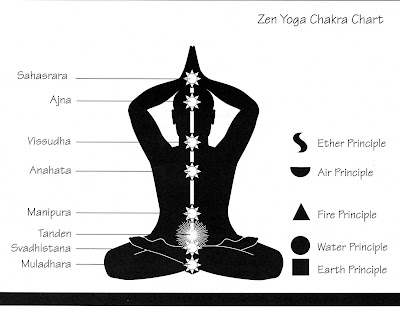
TANTRA YOGA (Part 9): Chakras - Sahasrara Chakra

The following is the ninth installment of a new book on Tantra Yoga that I am writing. As a follower of this blog you have the opportunity to read this soon to be published book as each chapter comes out. So please make sure to check this blog as often as you can. Or better yet, sign up as a follower of this blog to be automatically notified via email when each new
installment comes out.


CHAKRAS (continued)...

(7) Sahasrara Chakra

You can leave your physical body through sahasrara chakra. You can ride on your astral body and leave this physical body (astral projection) and return to God, where you originally came from. In there, you'll hear the voice of God and realize the reasons for all existence, God, and be led to supreme ecstasy. (You have no more questions, you know everything). You can leave your body and get into another's body and give positive influence to the mind and body of others. The self (you) becomes wider, more free and able to be one with God in higher dimensions... siddhis of completely awakened sahasrara chakra. This itself is the completion of our evolution.

By the way, sahasrara chakras is the most high, supreme chakra of human beings!!! But it is the lowest chakra of divine spirits (gods), like muladhara chakra is the highest chakra in animal kingdom but lowest in our kingdom.

Look for the continuation of my book in the upcoming blogs where I will discuss the actual practice to reach self-realization: yoga ashtanga.


Thursday, July 2, 2009

TANTRA YOGA (Part 8): Chakras - Ajna Chakra

The following is the eighth installment of a new book on Tantra Yoga that I am writing. As a follower of this blog you have the opportunity to read this soon to be published book as each chapter comes out. So please make sure to check this blog as often as you can. Or better yet, sign up as a follower of this blog to be automatically notified via email when each new
installment comes out.


CHAKRAS (continued)...

(6) Ajna Chakra

The ajna chakra is located between the eyebrows or in the center of the forehead, known as the third eye. This is the first chakra that the practitioner should endeavor to awaken. Awakening of the ajna chakra will unwind karma. Ajna chakra purifies the mind and it has the ability to control all the other chakras. By concentrating and meditating on the ajna chakra, it starts to awaken, and the practitioner will experience great change in his mind and starts to purify the mind. When the mind is purified, then there will be no problems---problems occur only when the practitioner concentrates and meditates on other chakras (other than the ajna chakra). Because chakras other than ajna chakra carry various karmas, especially at muladhara, everything of karma is stored. Yogis usually meditate on this chakra to purify the mind. So when various karma rise up from various chakras, one's mind will not be taken over by karma. Therefore, yogis should not attempt to awaken the other chakras before waking up the ajna chakra. The principle of this chakra is consciousness.

Siddhis of the Ajna Chakra

When yogis start to realize the God within, the beginning of self-realization occurs---not human consciousness, but deeper and broader, higher consciousness---and the superconsciousness will be awake all the time. There will be a complete understanding of the past, present, future, and karma of yourself, otherself, past life, karma of place, country and planet. The most important thing about ajna chakra is that it will purify the karma and transcend the karma. In order for a human being to evolve to above human being (completion of evolution), complete awakening of ajna and sahasrara chakra is absolutely necessary.


Thursday, June 18, 2009

TANTRA YOGA (Part 7): Chakras - Visuddha Chakra

The following is the seventh installment of a new book on Tantra Yoga that I am writing. As a follower of this blog you have the opportunity to read this soon to be published book as each chapter comes out. So please make sure to check this blog as often as you can. Or better yet, sign up as a follower of this blog to be automatically notified via email when each new 
installment comes out.


CHAKRAS (continued)...

(5) Visuddha Chakra (throat chakra)

The location of the visuddha chakra is near the throat/thyroid gland area in the physical body. Its principle is ether, and it is identified  with hearing and it relates to voice/vocal cord and the ears. The visuddha chakra is directly related with sahasrara chakra, the highest point of human's awareness. The function of vissudha is to purify the poisons occuring in the body and poisons coming into the physical form from the outside, and to increase metabolism in order to be able to live for a long time. In other words, you can maintain your physical body for a long time. In my opinion, by awakening up the visuddha chakra completely, HIV can be totally purified from the system. It can also completely control food and liquids. So you can live without eating for a long time. The visuddha chakra is able to transform the energy of the mental (causal) dimension into a physical dimensional energy such as oxygen and protein, to substitute for food to maintain the physical body. Many of you have heard the story of yogis buried underground for several days or even weeks without any food and water, who do not die. This is the siddhi from awakened visuddha chakra and it is known as "underground samadhi". The siddhi of this chakra is one of becoming extremely sensitive towards the vibration of people's thought; in other words, the ability of telepathy. It is said that the manipura chakra receives otherselves' thoughts, but the reality is that visuddha picks up the vibration and transmits it to the manipura and then to various centers in the brain to recognize. The supreme siddhi of this chakra is the ability to completely understand the Veda, the oldest holy text of the truth of the universe.

Tuesday, June 16, 2009

TANTRA YOGA (Part 6): Chakras - Anahata Chakra

The following is the sixth installment of a new book on Tantra Yoga that I am writing. As a follower of this blog you have the opportunity to read this soon to be published book as each chapter comes out. So please make sure to check this blog as often as you can. Or better yet, sign up as a follower of this blog to be automatically notified via email when each new 
installment comes out.


CHAKRAS (continued)...

(4) Anahata Chakra

This is my favorite chakra and is known as the heart chakra or heart center. The meaning of anahata is "never stop" or endless. Nonphysical, transcendental, endless, beginningless sound, anahatanada exists in anahata chakra. Its location in the physical body is near the heart and cardiac plexus. The space of the heart in the physical body is very small, but the space of the heart in the astral dimension, which is anahata chakra, is very large and formless, and everything occurs from there.

The 3 chakras, from muladhara to manipura chakra, relate to the maintenance of the physical body---the senses that connect body and mind. Therefore, they are strongly related with worldly matters; in other words, cause and effect (karma) is very dominant. The lower three chakras are always related to karma. At the muladhara and svadisthana chakra state, the practitioner is completely governed by karma accordingly. At the state of the manipura chakra, the practitioner is still tied up with karma, but partially transcends karma and is able to control his life with will rather than be controlled by karma. Most people are born, grow up, and do various human actions through karma. Basically, anahata chakra is not influenced by karma which influences the lower three chakras.

Yogis who have attained anahata chakra know that karma is a reality, but are able to transcend and be free from it. The function of anahata is to transcend this wordly dimensional karma, so one who has developed anahata chakra is free from karma and at the same time is able to control the world of karma at his will. In other words, he can accomplish anything which he desires in this karma world. There is a great difference in functions and siddhis up to manipura chakra and from anahata chakra. Up to manipura chakra, the practitioner is just receptive of his karma, but at the anahata the practitioner is able to accomplish any kind of desire he wishes. The anahata charka's function of "accomplishing anything desired" is a function of kalpavriksha. Kalpavrikhsa is a tree, the evergreen tree, known as the tree of hope inside anahata chakra. This "tree of hope" is in everybody's anahata chakra, but it only appears and functions in those who have awakened the anahata chakra completely. By the way, yogis who have awakened the anahata chakra are able to accomplish any desire or wish in life, but whether his wish is good or bad, it will be accomplished equally. Therefore, yogis who have awakened this chakra and yogis who attempt to develop this chakra must be selfless (no ego), maintain positive attitude towards life, and have a good personality. Otherwise, he will create disharmony in society (one individual can destroy the whole world). Hindus believe that the absolute one, the creator God, Brahma (macrocosm) is living in the anahata chakra as Atman (microcosm). Basically, Atman (self, soul, spirit, God-within, etc.) is Brahma (God, creator). Atman is always one with Brahma. This experiential philosophy is at the core of the Hindu religion. The principal element of this chakra is air. Therefore, siddhis occuring from this chakra are for the control of air and wind. Nonpersonal but universal love will be awakened and become eloquent with poetic genius. Desires and wishes come true. Increasing of healing power, such as prana healing by placing one's hand on a patient and and send prana (ki) to heal otherself.  Otherself? Yes, you are "yourself" and other people besides you are "otherself". The word "otherself" is used by Dogen Zenji (Zen Master Dogen). Dogen Zenji has attained this high consciousness of myself and otherself through zazen meditation. Basically everything is oneness. I am you and you are me and I am everything and everything is me. This is the reality. But you simply could not see it that way. Simple because this is the state (level) human beings are at. This level is needed to evolve to "oneness" level. No matter what, we are going to be there anyway. In several hundred millions years time everybody will be there. We are in the middle of the evolution of the universe.

Everything came from nothingness and emptiness and became somethingness. Then why "somethingness"? To go back to emptiness! So blockage of this chakra causes inability communicate.

Thursday, June 11, 2009

TANTRA YOGA (Part 5): Chakras - Manipura Chakra

The following is the fifth installment of a new book on Tantra Yoga that I am writing. As a follower of this blog you have the opportunity to read this soon to be published book as each chapter comes out. So please make sure to check this blog as often as you can. Or better yet, sign up as a follower of this blog to be automatically notified via email when each new 
installment comes out.


CHAKRAS (continued)...

(3) Manipura Chakra

This is the third chakra from the bottom. Its location is around the navel area, or solar plexus. The muladhara and svadisthana chakras are at an animal-like, instinct dimension. The principle of this chakra is fire. Therefore, awakening this chakra will bring loss of fear towards fire and the ability to control it. The siddhis that occur from awakened manipura chakra are clairvoyance, clairaudience, and control of strong passion and will power. At the state of muladhara and svadisthana chakras, the personality of the practitioner is still not completely purified, so the practitioner will demonstrate siddhis, but also demonstrates his egocentric self. In the state of the manipura chakra, the practitioner starts to see things that he's never seen before and understands them. In this way of understanding, the muladhara relates with the physical dimension; svadisthana is in between physical and spiritual; and manipura is in the spiritual dimension. Therefore at this state, the practitioner will leave the consciousness of the personal and emotional. Also concentration on this chakra will increase digestion.